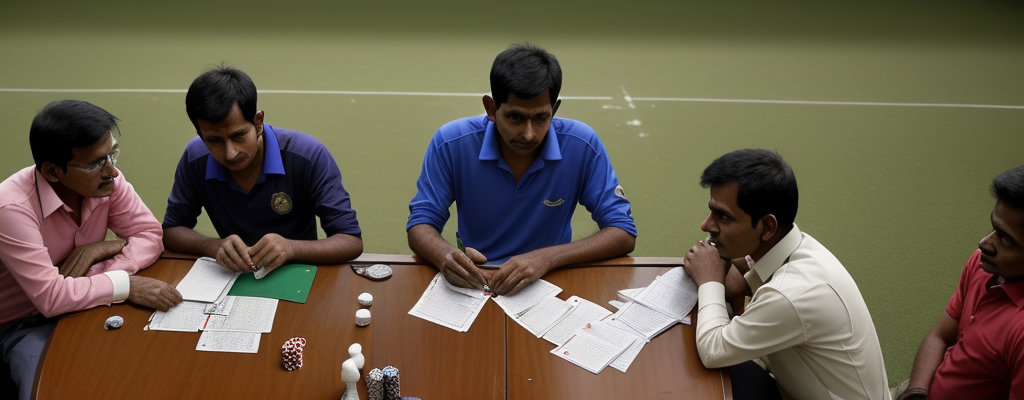
There is no single punishment for betting in India. Gambling and betting are state subjects under the Indian Constitution, so each state writes its own penalties, and the answer changes depending on where you are playing from and what role you play in the transaction. The Public Gambling Act, 1867 still sits behind many state laws, but the penalties that matter today are set state by state — and the newer central rules for online money gaming are aimed squarely at operators, not at the person placing a casual bet.
In practice, enforcement lands hardest on organisers, bookies, agents who issue betting IDs and take commission, and platforms offering real-money play to Indian users. A casual punter staking small amounts is very rarely the target of a prosecution. That is not a promise of safety — it is an honest description of where police and regulators actually spend their time and budget.
This page is general information, not legal advice. If you are facing an actual case, speak to a lawyer in your state.
The Public Gambling Act, 1867 — the Law Most People Mean
When people search for the punishment for betting in India, the statute they usually end up reading about is the Public Gambling Act, 1867. It is a colonial-era law, and it does not say what most readers expect. Its central target is the common gaming house — the physical premises where gambling is run — and the people found gambling inside it. The penalties written into the Act are small fines and short terms of imprisonment, fixed in 1867 and never designed for a world of smartphones.
That age is the whole problem. The Act was drafted decades before the telephone, let alone the internet, so it has nothing meaningful to say about an app, a website, or a bet placed through UPI. It does not define online betting, and it does not set a penalty for it.
What it did do is become the template. When Indian states wrote their own public gaming or gambling laws, many of them kept the 1867 Act, adopted its language, or adapted it with heavier penalties of their own. That is why the same phrase — "public gambling" — shows up in state law books across the country with very different numbers attached.
Under the Act as it still stands in many states, the enforcing authority is local: magistrates and the police. Cases are typically about raiding a premises, seizing materials, and charging the people running the operation. That enforcement model explains a lot about who actually gets prosecuted today.
How Your State Changes the Punishment
Because gambling and betting sit on the state list, the honest answer to "what is the punishment?" is: it depends on your state. Some states have their own public gaming or gambling acts with their own fines and jail terms, and those penalties differ from one state to the next. They are also amended often, sometimes in opposite directions — states have moved quickly both to tighten enforcement and to relax it.
One useful exception to keep in mind: licensed horse racing at racecourses is treated differently from other sports betting. That carve-out has existed for a long time and is written into how several states handle racing, which is why horse racing sits apart from cricket or football in most legal discussions.
Your framework for checking your own position is straightforward:
- Identify the state you are physically betting from, not the state where the operator is registered.
- Find that state's current public gaming or gambling act, and read it in its current amended form — not a blog summary from three years ago.
- Check whether the state has issued any separate rules specifically covering online or online money gaming.
- Check whether your activity falls under a licensed exception, such as racing at a racecourse.
If you only take one thing from this page, take this: the state you play from matters more than anything else.
Betting in India: Which Law Applies, and to Whom
| Law / rule | Mainly aimed at | Type of penalty | Where it bites today |
|---|---|---|---|
| Public Gambling Act, 1867 | Keepers of common gaming houses and people found gambling in them | Small fines or short terms of imprisonment, fixed back in 1867 | Still on the books in many states, but rarely the basis of a modern online-betting case |
| State gambling / public gaming laws | Gambling activity inside that state, increasingly written to cover online play | Fines and imprisonment set state by state and amended often | The real risk zone — the state you play from matters more than anything else |
| Central online gaming reform (2025) | Operators and promoters offering real-money online gaming and betting to Indian users | Heavy fines and imprisonment aimed at companies and individuals running the games | ISPs, app stores and payment rails; operators are the target, not casual users |
| Foreign exchange rules (FEMA) | Moving money abroad in breach of exchange-control rules | Penalty calculated on the amount involved | Relevant if you fund an offshore betting account from an Indian bank account |
| Income Tax Act, 1961 | Winnings from betting, gambling and card games | Flat 30% tax on winnings, collected at source | Not a punishment, but it changes what you actually keep |
| Blocking orders against betting sites and apps | Services being made available to Indian users | Domains, apps and payment routes taken offline | Explains why access is inconsistent from one week to the next |
Does the New Central Online Gaming Law Change Anything?
Last updated: 2025. Central online gaming regulation and several state laws changed during 2025 and are still being amended. Re-check the current position before acting on anything in this section.
The newest layer of regulation is central online gaming legislation introduced in 2025. Unlike the 1867 Act, this framework is written with the internet in mind, and it targets online money gaming offered to users in India — real-money games and betting, rather than a physical premises.
Its penalties are heavier than anything in the old colonial statute, and they are aimed at operators and promoters: the companies running the games, and the individuals promoting or facilitating them. Alongside the penalties sit advertising and payment-channel restrictions, app-store and ISP blocking, and pressure on the payment rails that move money between players and offshore operators.
That combination is why access to some sites and apps is inconsistent from one week to the next. Domains get blocked, apps disappear from stores, and payment routes stop working — usually without notice to the user.
This section is deliberately short and written so it can be rewritten without touching the rest of the page. Enforcement here is new and still developing, and the practical position is shifting as rules are tested and amended. Treat everything above as the current state of play at the time of writing, confirm the latest details directly on official sources, and check the current terms on any operator's official website before you rely on them.
For the permission question rather than the consequences question, see is online betting legal in India? — this page deliberately does not repeat those arguments.
Who Actually Gets Prosecuted in India?
Look at enforcement rather than statute, and a clear pattern emerges. The people charged are organisers, bookies and local agents; people running betting IDs and taking commission on other people's bets; and anyone whose betting operation is tangled up with a money-laundering case. Police raids in India overwhelmingly target local syndicates — a flat being used as a betting office, a network of agents collecting cash, a WhatsApp group moving stakes for a big match.
Casual bettors are rarely the target. Investigating a single punter who staked a few hundred rupees is poor use of police time, and prosecution typically requires evidence of running or facilitating the operation rather than participating in it.
Two caveats are worth holding at the same time. First, enforcement activity is uneven across states — a raid culture in one state tells you nothing about another. Second, attention concentrates around major tournaments. Expect more visible enforcement around the IPL and major T20 fixtures than in a quiet month, because that is when the money moving through informal channels is largest and most visible.
If your interest is cricket specifically, the narrower question of whether cricket betting is legal in India is covered separately.
Beyond the Criminal Question: Tax, FEMA and Blocked Sites
Most bettors will never see a criminal case. They will still feel consequences, and these are the ones worth planning around.
Tax. Winnings from betting, gambling and card games fall under the Income Tax Act, 1961 and attract a flat 30% tax on winnings, collected at source. This is not a punishment — it is simply a deduction that changes what you actually keep. Winnings are also subject to tax deducted at source when paid out, and GST applies to online money gaming. Depending on your turnover and activity, you may have reporting obligations beyond the deduction itself.
FEMA. If you fund an offshore betting account from an Indian bank account, you are moving money across the exchange-control rules. FEMA penalties are calculated on the amount involved, so the exposure scales with how much you move — not with whether anyone was ever charged.
Blocked sites. Sites and apps get blocked without warning. When that happens, there is no realistic route to recover funds from a blocked operator. Your balance is not held in an Indian account, and no Indian authority is going to chase an offshore company on your behalf. This is the practical risk most people underestimate.
Keep deposit and withdrawal records. If a payment route stops working, having a clean record of what you deposited and what you won is the only thing that helps you.
What This Means for You as a Bettor
Pull it together into something you can actually act on.
- Check your own state's current position rather than relying on a national headline. The state you play from is the variable that matters most.
- Avoid local bookies and informal ID providers. They are the exact group enforcement targets, and dealing with them puts you inside the risk zone rather than outside it.
- Keep records of deposits, withdrawals and winnings, so your tax position is documented if you ever need to explain it.
- Set deposit limits before you play, not after a bad session. Decide the number while you are calm and let it govern the session.
- Treat blocked sites as a real risk to your balance, not a temporary inconvenience.
Leon Casino India is for adults aged 21 and over, and any bonus or promotional offer mentioned on this site is subject to terms and conditions that apply — always read them before opting in.
For the wider picture, start with the Leon Casino India FAQ hub, and if betting stops feeling like entertainment, read our responsible gambling guide.